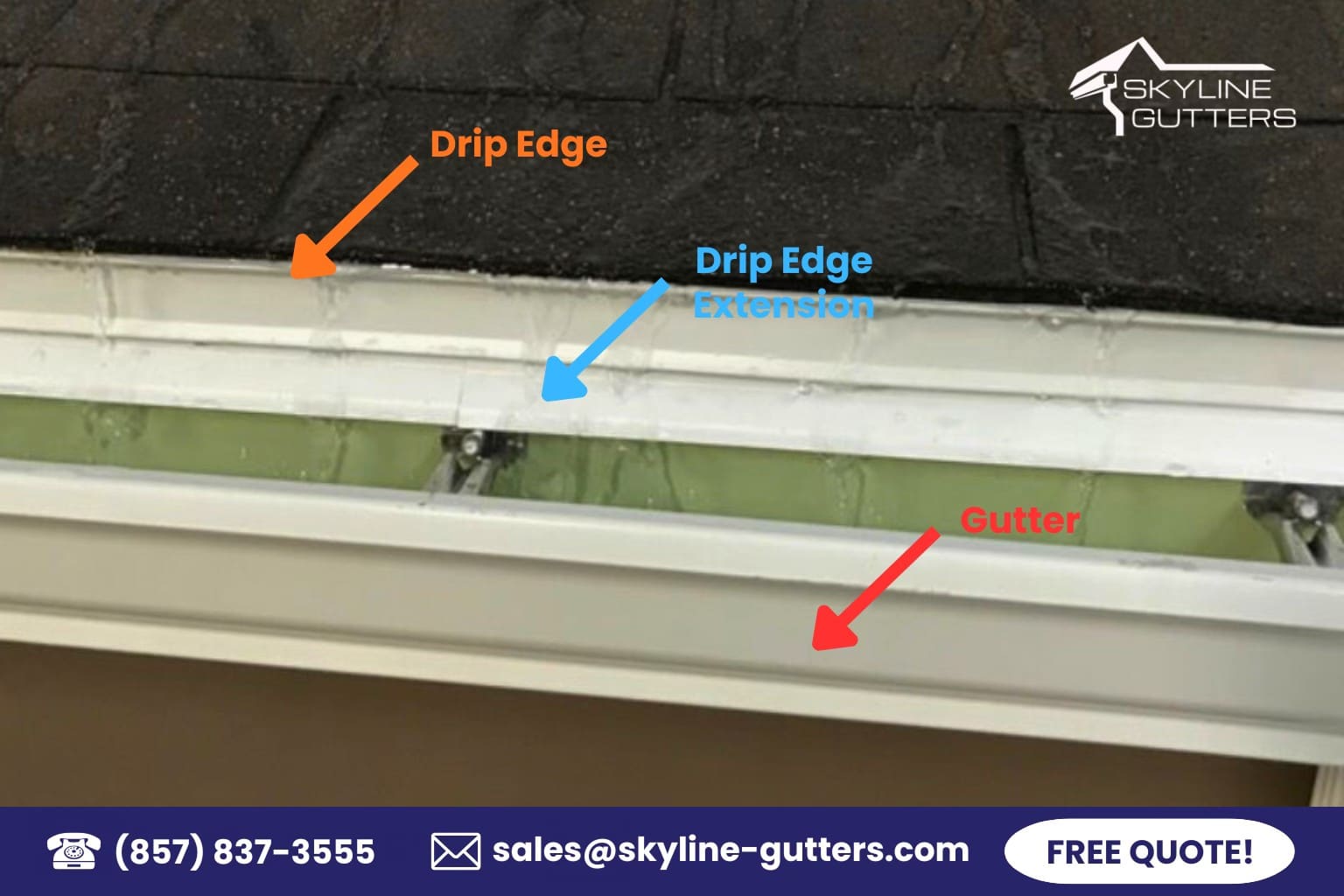
How Surface Tension Causes Water to Run Behind Gutters
Water doesn’t always drip straight down. Because of surface tension, water naturally wants to cling to surfaces and follow them. When rain runs off your roof, it sticks to the underside of the drip edge or shingle instead of dropping cleanly into the gutter.
This is especially common on roofs with newer shingles, metal drip edges, or smooth surfaces where water can easily “wrap” underneath instead of breaking off into the gutter.
If the back edge of the gutter is not tucked up behind the drip edge, or not behind a drip edge extension flashing, surface tension will literally pull the water backward, carrying it behind the gutter and down the fascia board.
Over time, that constant moisture can cause fascia rot, paint peeling, staining, and even mold growth behind the gutter system.
💧 Gutters are clean
💧 Rain isn’t especially heavy
💧 The gutter pitch is correct
It’s not a clog problem, it’s a water-path problem.
Many homeowners assume leaks mean blockage or improper slope, but in cases like this, the system may be draining fine. The issue is simply that water never makes it fully into the gutter to begin with.
The Correct Solution: Drip Edge Extension Flashing
When fascia is still solid (not rotten), the professional fix is drip edge extension flashing.
This flashing:
💧 Slides up behind the existing drip edge
💧 Extends down into the gutter
💧 Ensures water will not run behind the gutter
By creating a proper path for the water to break and drop directly into the gutter trough, it eliminates the surface tension effect that causes backward flow. It’s a targeted solution that fixes the root of the problem, not just the symptoms.
When installed properly, it protects your fascia, siding, and foundation from long-term water damage and prevents costly structural repairs later on.