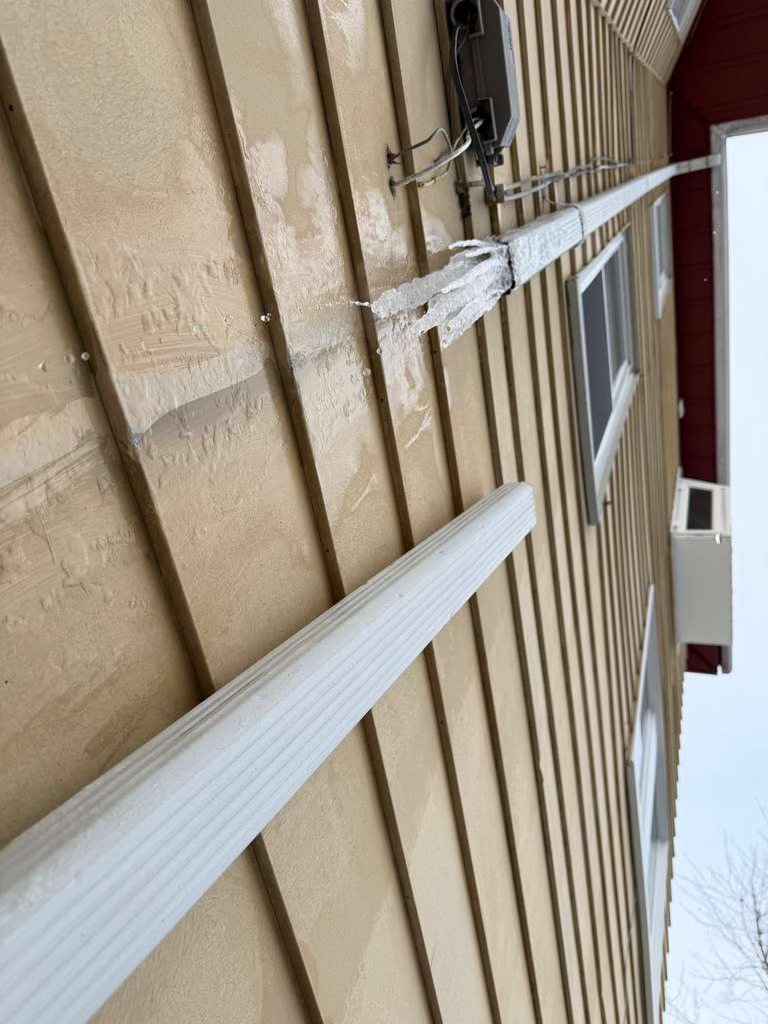
Gutters can ice up for a number of reasons but these are the most common:
1. Downspouts are undersized for the roof area and freeze up faster because of the high water volume
When too much water is forced through a small downspout, it slows down in freezing temperatures. That slower-moving water can turn to ice quickly, especially during heavy snow melt or rapid temperature drops.
2. Downspouts are plugged or partially plugged because of debris and the blockage causes the water to freeze up.
Even a small amount of debris can restrict flow. When water can’t drain efficiently, it sits in the downspout longer, giving it time to freeze. Once ice forms, it traps more water behind it, making the problem worse.
3. Thawing and freezing happens over a period of time and ice slowly builds up in the downspouts.
During the day, snow melts. At night, temperatures drop and that meltwater refreezes. This freeze-thaw cycle repeats and gradually creates solid ice blockages inside the downspout.