
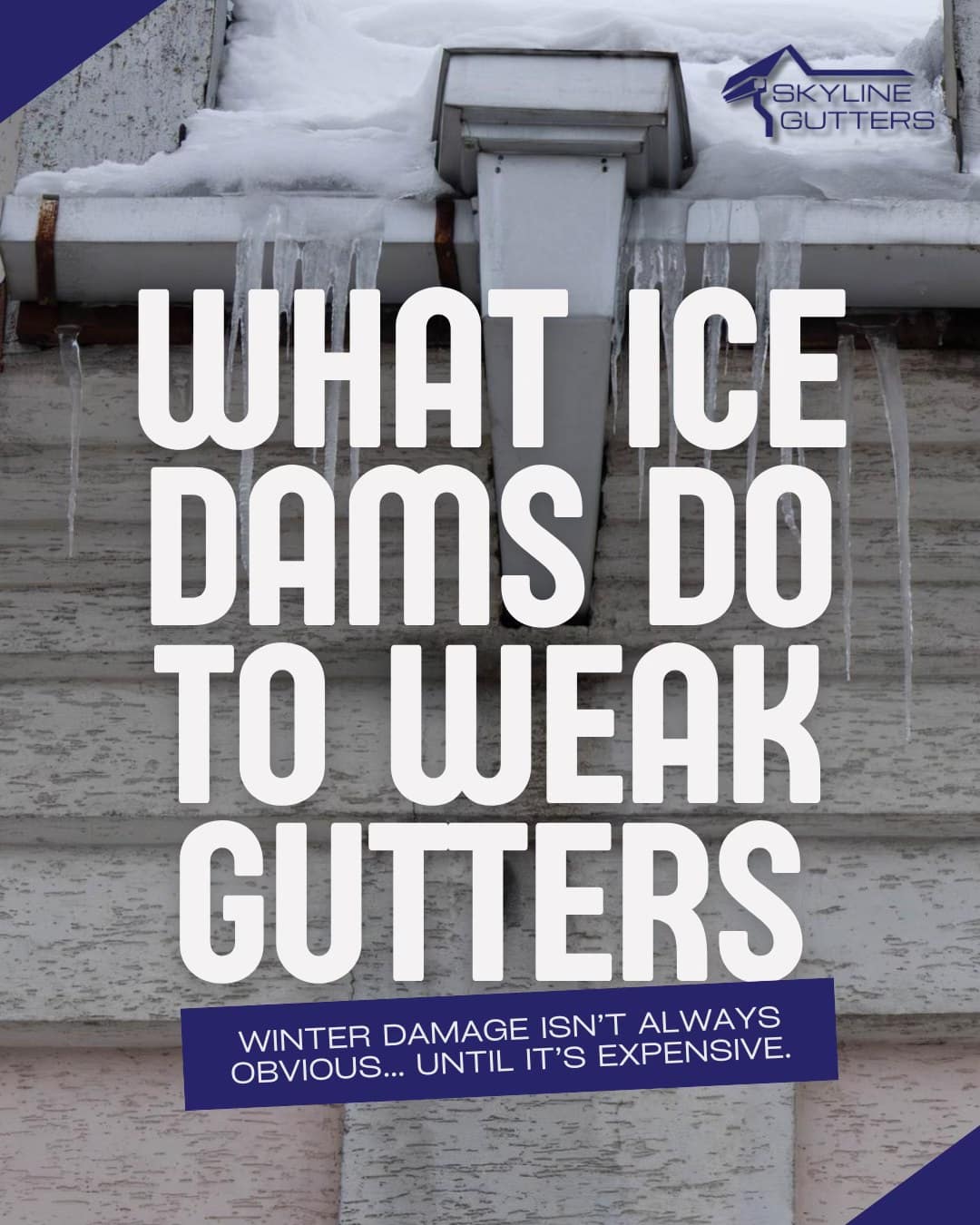
Ice dams form when snow melts, refreezes, and builds up along the roof edge. That frozen weight has nowhere to go, and when it sits on weak gutters, systems start to fail.
As meltwater runs down the roof and hits the cold edge, it freezes again, creating a solid ridge of ice. That ridge traps additional water behind it, increasing both the weight and the pressure on your gutter system.
Gutters can bend or pull away, fasteners loosen, and water can back up under shingles.
When water backs up, it can seep into the roof decking and fascia, leading to hidden moisture damage, interior leaks, and costly repairs.
Snow and ice create serious weight, and standard gutter systems aren’t designed to handle heavy snow loads, solid ice buildup, or constant freeze-thaw cycles.
Over time, repeated freezing and thawing expands and contracts materials, weakening brackets, seams, and connection points.
That’s why reinforced gutter systems matter. They’re built to hold the weight, stay secure through winter conditions, and protect your roof, fascia, siding, and foundation.
Stronger hangers, thicker materials, and proper spacing between supports all make a difference when winter weather puts your home to the test.
Built for winter, not just looks.
If your gutters weren’t designed for snow load, winter will find the weakness.
Thank you for reading. Stay tuned for more updates.