
How to Check Your Gutters for Leaks
Leaky gutters don’t just mean an annoying drip. Over time they can lead to rotted fascia boards, damaged siding, and even foundation issues. The good news is you can check your gutters for leaks yourself in about 15 minutes with nothing more than a garden hose. Here’s how.
What You’ll Need
- A garden hose with a spray nozzle
- A helper (optional, but makes it easier to watch from the ground while someone else runs the hose)
- A few minutes of dry weather
Step 1: Set Your Nozzle to the Jet Setting
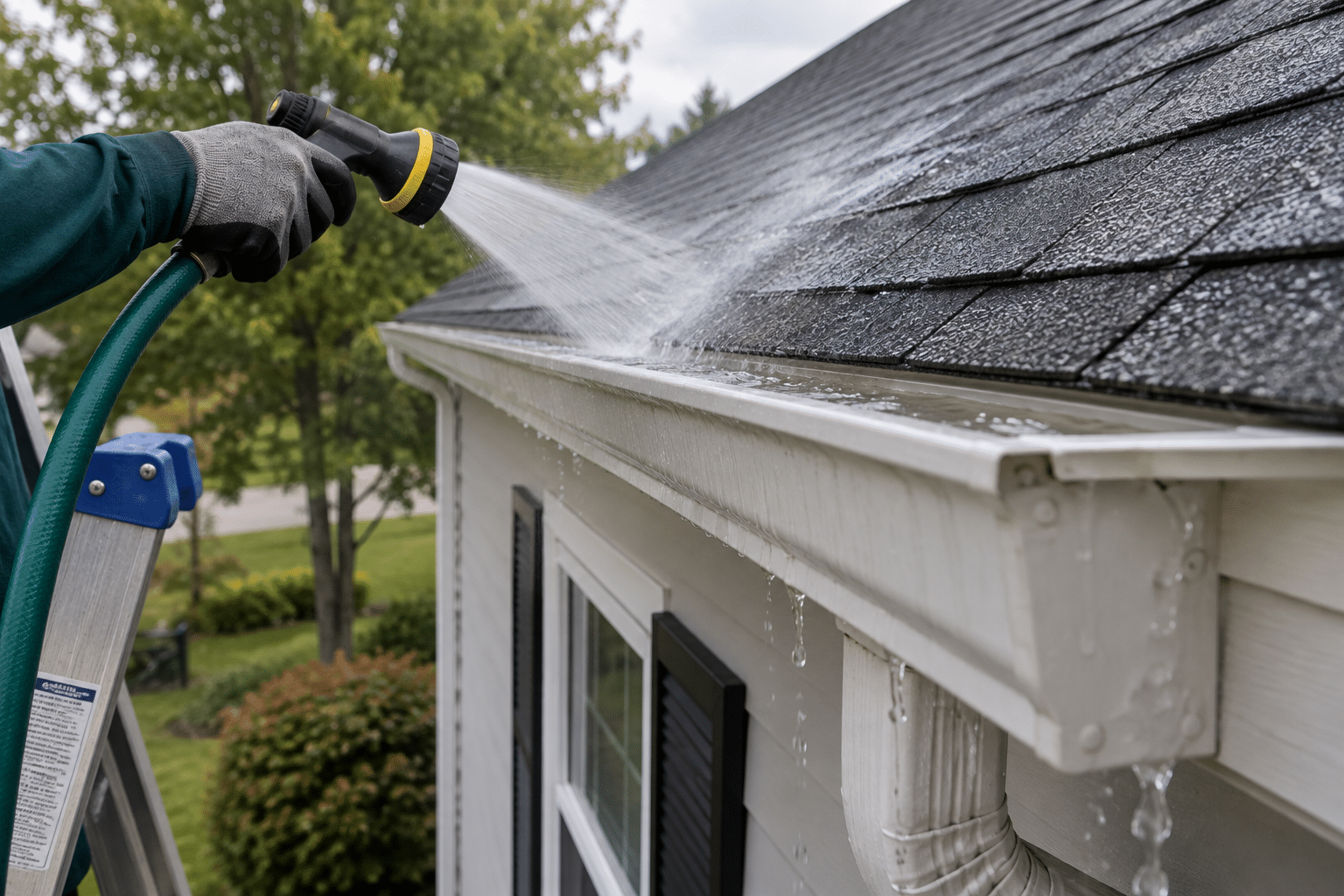
Turn your hose nozzle to the jet or stream setting. A wide mist won’t reach far enough. You need a strong, focused stream so the water can actually carry all the way up onto your roof above the gutter line, not just spray into the gutter itself.
Step 2: Aim at the Roof, Not the Gutter
Point the jet up at your roof, just above the gutter line, rather than spraying directly into the gutter itself. This lets the water flow down the roof and into the gutter the way rain actually would, giving you a more accurate picture of how your system performs in a real storm.
Step 3: Let It Run
Keep the water running for several minutes. Give it time to fill the gutter and make its way through the downspout. A quick blast won’t reveal much, since leaks often only show up once the system is under sustained flow.
Step 4: Watch for These Warning Signs
While the water is running, walk the length of your gutters and check for:
- Drips at the corners and miters. These joints are the most common spot for leaks, since the sealant there breaks down over time.
- Water running behind the gutter. If you see water sneaking between the gutter and the fascia board instead of falling into the trough, that’s a sign the gutter has pulled away from the roofline or the hangers have loosened. It can also mean the gutter is missing a gutter apron or flashing, which is meant to guide water into the gutter instead of behind it.
- Water overshooting the gutter. This can mean the gutter is pitched incorrectly or is undersized for the amount of water coming off your roof.
- Slow drainage through the downspout. If water is pooling instead of draining, you may have a clog rather than a leak.
Step 5: Mark What You Find
As you spot problem areas, mark them with a piece of tape or take a photo on your phone. It’s easy to forget exactly where a leak was once the water stops running and everything looks dry again.
When to Call a Professional
Small leaks at corners and miters can often be resealed with gutter caulk. But if corrosion has started, the gutter system may need to be replaced rather than resealed. And if you’re seeing water behind the gutter, sagging sections, or damage to the fascia board, it’s worth having a professional take a look, since those issues usually point to a bigger problem than a simple seal failure.
Not sure what you’re looking at? Reach out and we’ll come take a look.