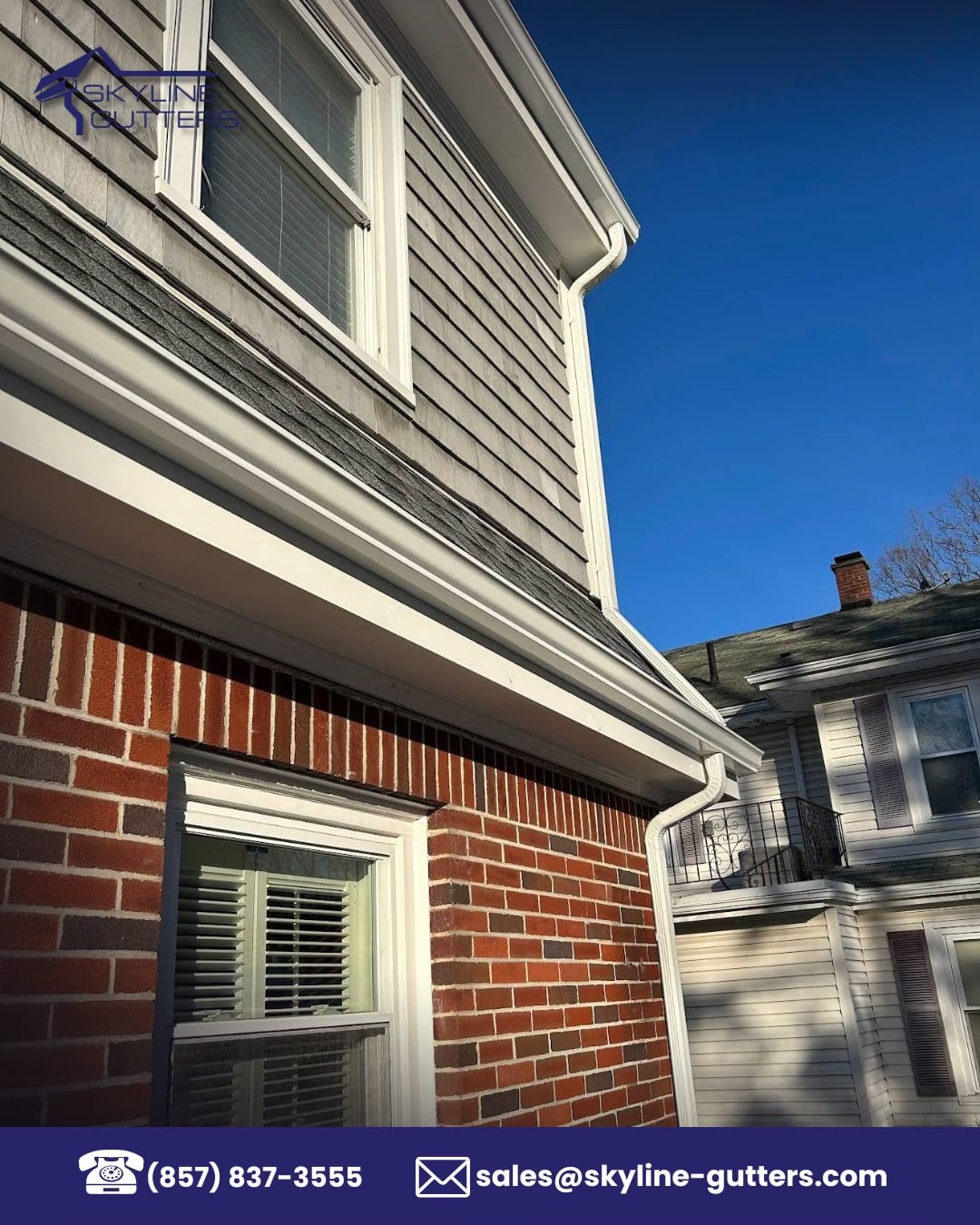
If your downspout location does not allow the downspout to go down to the ground from your roof line, but needs to end at the roof below, the downspout should continue directly into the lower gutter.
This ensures that water is properly redirected and controlled instead of being released onto a finished roofing surface. It keeps the water moving through a managed drainage path rather than allowing it to free-fall onto vulnerable materials. Proper water control is critical to protecting every layer of your roofing system.
Having water dump directly onto your roof shingles causes shingles in that spot to wear out quickly and can cause streaks and stains on your roof.
Constant water flow in one concentrated area can also loosen granules on asphalt shingles, shorten their lifespan, and increase the risk of leaks over time. Shingle granules are designed to protect against UV rays and weather exposure. When they wash away prematurely, the exposed shingle underneath deteriorates much faster.
During heavy rain, that concentrated flow can overwhelm the lower roof section and cause premature deterioration. Instead of evenly distributing water across the surface, all that volume hits one small area repeatedly, accelerating wear and tear.
Over time, this can weaken shingles, damage underlayment, and increase the chance of water intrusion into the roof decking. Left uncorrected, it may also impact the fascia and gutter system below.
Call us to get your downspouts fixed today so you can save your shingles!
Properly routing your downspouts protects your shingles, prevents long-term roof damage, protects your fascia and siding, and helps extend the life of your entire gutter system. A properly designed drainage system doesn’t just move water, it protects your whole home from top to bottom.