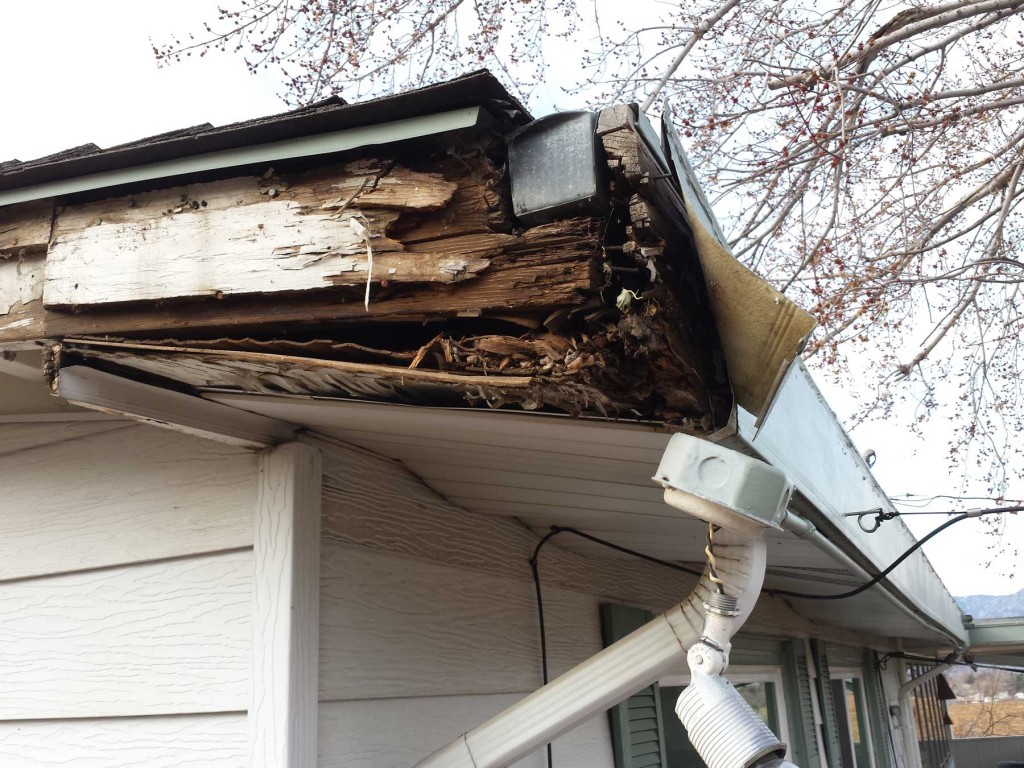
Rotten fascia isn’t just “old wood.”
In most cases, it’s a moisture problem, and that moisture is usually coming from your gutter system.
Your fascia sits directly behind your gutters, so it relies on them to catch and move water away from your home. When that system isn’t working properly, the fascia is the first place damage shows up.
How Clogged Gutters Lead to Rot
One of the most common causes is clogged gutters.
Leaves, dirt, and debris build up over time and trap moisture. Instead of water flowing out, it sits in the gutter and soaks everything around it.
That debris stays wet long after it rains, keeping the area constantly damp. Over time, that moisture leads to:
• Wood rot
• Mold growth
• Structural damage
When Water Gets Behind the Gutter
Another major issue is how the gutter is positioned under the drip edge.
If the gutter is installed too low, water doesn’t always drop cleanly into it. Because of surface tension, water can cling to the underside of the drip edge and run back toward the fascia.
That means water is being directed right onto the wood behind the gutter, even when the system looks clear.
Why the Damage Gets Worse Over Time
Fascia damage doesn’t happen overnight.
It’s caused by repeated exposure. Rain after rain, the wood stays damp without enough time to fully dry out.
Over time, that constant moisture breaks the wood down.
Signs Your Fascia May Be Rotting
There are a few warning signs to look for:
- Peeling or bubbling paint
• Soft or spongy wood
• Dark staining or discoloration
If you’re seeing any of these, water is likely getting where it shouldn’t.
Fixing the Problem the Right Way
Replacing the wood alone won’t solve the issue.
The real fix is making sure water is properly controlled by:
• Keeping gutters clean
• Ensuring correct gutter placement
• Directing water away from the fascia
Some homeowners also choose to upgrade to maintenance-free trim to prevent future problems.
The Bottom Line
If your fascia is rotting, it’s usually a sign your gutter system isn’t doing its job.
Fixing the root cause, not just the damage, is what protects your home long term.